


The term “polycrisis” has gained significant traction over the last few years. It has been used, misused, reused, and abused in relation to social and political analysis, so much so that The Times called “polycrisis” the “buzzword of 2023”.
The term first became popular amid two separate crises: the COVID-19 pandemic since 2020 and the Russian War in Ukraine since 2022.
Writing in the Financial Times in October 2022, Adam Tooze noted: “We are in an era of ‘polycrisis’”. A little before that, Tooze elaborated on the phenomenon in his newsletter Chartbook. Tooze explained: “A polycrisis is just a situation where you face multiple crises. It is a situation like that mapped in the risk matrix, where the whole is even more dangerous than the sum of the parts”.
In simpler terms, polycrisis refers to multiple crises overlapping, interacting, and compounding to produce an overarching global crisis.

The term itself was not coined by Tooze, and it has been in use for several decades in multiple forms. Take, for example, the 2022 Cascade Institute paper, in which the term “polycrisis” is traced back to the 1999 book Homeland Earth: A Manifesto for a New Millennium by French philosopher and sociologist Edgar Morin and co-author Anne Brigitte Kern. Morin and Kern describe polycrisis as “interwoven and overlapping crises” affecting human society.
Building on Morin and Kern, the South African environmental theorist Mark Swilling defined polycrisis as “a nested set of globally interactive socio-economic, ecological and cultural-institutional crises that defy reduction to a single cause”. Similarly, in 2016, the then-president of the European Commission, Jean-Claude Juncker, deployed the term to describe the eurozone-Brexit-climate-refugee crisis.
Even when the term itself lurked in the background, Tooze popularised the term to understand the global crises that encapsulate the present world. Tooze wrote:
Pandemic, drought, floods, mega storms and wildfires, threats of a third world war—how rapidly we have become inured to the list of shocks. So much so that, from time to time, it is worth standing back to consider the sheer strangeness of our situation.
For Tooze, crises such as the COVID-19 pandemic, the sovereign debt crisis, rising inflation, the worldwide food crisis, the war in Ukraine, genocide in Gaza, Trump tariffs, the US war in Iran, the crisis of the liberal international order, and the climate emergency constitute a polycrisis.
The Cascade Institute paper has highlighted: “What may appear to be separate crisis in different global systems in fact interact, exacerbate, and reshape one another to form a conjoined ‘polycrisis’ that must be understood and addressed as a whole”. “A global polycrisis”, it has argued, “occurs when crisis in multiple global systems become entangled in ways that significantly degrade humanity’s prospects. These interacting crises produce harms greater than the sum of those crises would produce in isolation, were their host systems not so deeply interconnected.”
In short, each crisis occurs less and less in isolation.
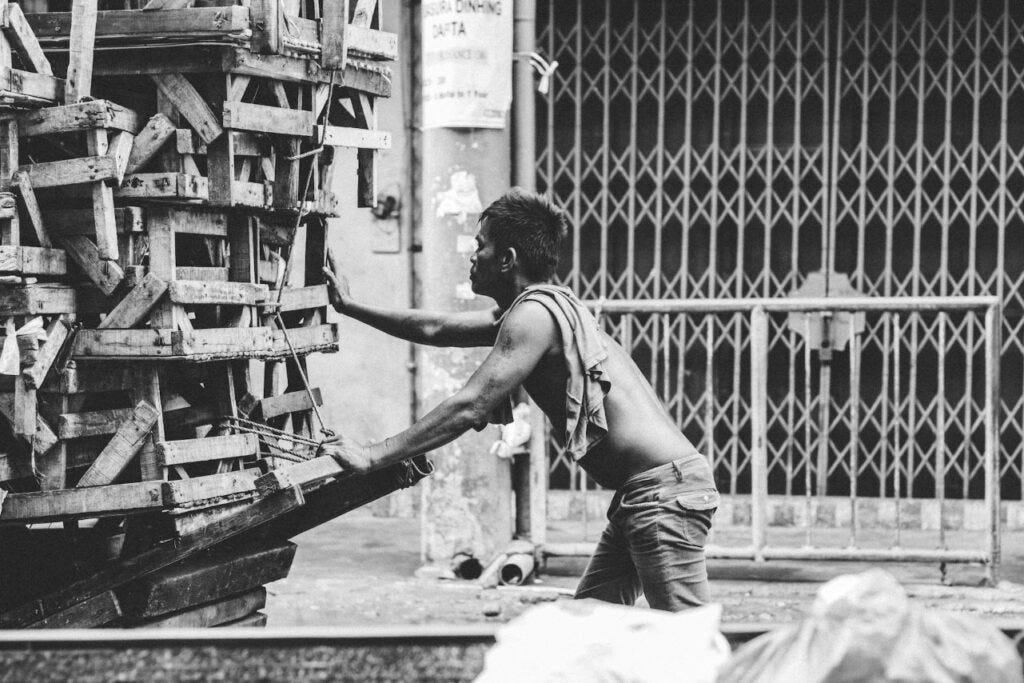
In their essay on polycrisis, Mathew Davis and Christopher Hobson argue that polycrisis is an enmeshed set of separate crises occurring simultaneously, with each interacting with the others (in both foreseeable and unexpected ways). There are no boundaries to each crisis. One crisis could easily pass over into another. Or that they could interact to produce a greater crisis effect. Or that they could affect one another to deepen the intended outcomes. As a result of such intersections and interferences among crises, there is often a breakdown of shared meaning, creating “layered social problems”. Polycrisis, as a collection of crises, is greater than the sum of its parts.
In polycrisis, Tooze writes: “at times one feels as if one is losing one’s sense of reality”. If one were to think reflectively about the world they inhabit, it is not surprising to conclude that something is really off with the world. Or that all is not too well. Or that the world has gone mad. Or it is all just confusing.
Polycrisis outlines the condition the world is in. And today, more people recognise that crises are interconnected and that polycrisis better captures how they interact, counteract, and complicate the world we live in.
But, is “polycrisis" a phenomenon of our times or is it, as Niall Ferguson has argued, “just history happening”? This is a difficult question to respond to. (Add to this: the artificial intelligence has made it difficult to think of what the world would look like in the next few years and decades.)
But, from a very cursory look at the world's historical events, it is hard to argue that the present predicament is any different from what existed earlier—and continues to exist today. If one were to think of polycrisis as a general condition of the world being in crisis, then our world has been in crisis since European colonisation.
Take a look at the events since. Colonisation. Displacement. Slavery. Economic inequalities. Poverty. Rise of Authoritarianism. Hitler. World Wars. Elite capture. Cold War. Ethnic and nationalist wars. Economic Crises. Global health crisis.
Each of these events seems to manifest in its connectedness. If we were to treat historical crisis events as interconnected, deeming them to cause and be caused by one another, then polycrisis has always persisted, is persisting, and will continue to persist over time.

While the general condition points us to human complexity, it is only with awareness that one acknowledges and comes to appreciate it. Now, let’s take any historical period (for simplicity, say, a five-year period since 1945). It is interesting to note that almost all of these periods are mediated by a polycrisis-like situation.
Since the Second World War, communities have faced turbulence and remained resilient every time. Poverty, as a general condition of societies in Africa and Asia, has persisted. Authoritarian dictators have been stomping over humans from time to time. Systemic violence, in the form of wars, ethnic cleansing, xenophobia and terrorism, has been on the rise.
Inequality as a human constant still exists as it has throughout time. Humans have designed weapons that would wipe them off the face of the earth in seconds. The climate crisis has both widened and deepened. In their various forms, these conditions have—and continue to—exist(ed) through time. Therefore, for me, polycrisis is nothing new but “just history happening!”

What, then, is it that we feel polycrisis differently from what historical societies felt? Perhaps an easy answer lies in technological interconnectedness. Today’s age is mediated by virtual media, which makes both our awareness of polycrisis and its effects feel real. Even when one crisis spiralled into another earlier, causing a polycrisis-like event, it was not so easily graspable. But today, with so much information and so much, perhaps, to use Anton Jäger’s term, hyperpolitics, polycrisis seems to be felt in the bones.
But, polycrisis does something more. It enables us to think of ourselves as risk societies, drawing on Ulrich Beck and Anthony Giddens, predicated on the notion of global solidarities in the face of risks induced by modernisation. Polycrisis points to the entangled nature of our livelihoods. It tells us we are not all as individualistic as we once thought. Today, one’s poverty is interlaced with another’s affluence. One’s suffering is adduced by another’s. One’s actions in part of Asia have adverse implications on another’s in Europe, and vice versa.
Moreover, this interconnectedness is already spearheaded by globalisation and mediated by the virtual spaces we share through the smartphones and laptops we carry around. Social media feeds not only keep us aware of what is happening around the world but also show that human lives are deeply intricate and interrelated.
Our problems do not remain just ours to deal with; their resolution depends on the problems others face. That is why when there is an attack on Ukraine, we have an opinion; when there is violence against civilians in Gaza, we have another opinion; when world leaders meet at a climate summit, we have yet another opinion; and so on. In each of these instances, we feel.
We strongly feel for others, as if their lives depend on how we feel about them.
Looking through social media feeds is a kind of exposure to crisis after crisis, and we feel that there is no end to human suffering, misery, and violence.
Therefore, Alastair Benn writes, “Modern technology creates the effect of confusion in our already over-stimulated, over-worked brains. It also has a secondary effect: interconnections between disparate events where none may exist seem suddenly plausible”. As Benn writes, perhaps Tooze’s “sheer strangeness of our situation” lies not so much “in the events themselves as in the media through which we view and interpret them.” Virtual media perpetuates shared anxieties. These shared anxieties make polycrisis feel real.