


Philosophical thought experiments are hypothetical situations intended to help explore complex philosophical concepts and issues. These hypothetical situations frequently put our presumptions to the test, stimulate our curiosity, and highlight the boundaries of our understanding.
Philosophical thought experiments have been a crucial component of philosophical research for millennia and are still relevant and thought-provoking today, ranging from Plato's Cave to the Trolley Problem.
This blog examines 15 of the most intriguing and perplexing philosophical thought experiments, which will test your understanding of reality and pique your interest in philosophy.
1. THE SHIP OF THESEUS
If a ship's parts are to be replaced over time, is it still the same ship?

The Ship of Theseus, one of the well-known philosophical thought experiments, raises questions about the nature of identity and continuity over time. In the paradox, the question is whether a ship whose components have been replaced over time is still the same ship.
On the one hand, asserting that the ship has not changed, even though some of its components have been replaced, would make sense. After all, we still call it by that name, and the structure and goals for which it was intended remain in place.
On the other hand, if the ship’s identity is based on its physical attributes, it would appear that the ship has changed. One could argue that the ship is a completely distinct entity if every component is replaced.
This paradox highlights issues in the nature of identity and change, with consequences beyond the context of ships.
It makes us wonder whether something can endure significant change while remaining essentially the same over time, and how we can tell when it has changed enough to no longer be the same thing.
2. THE TROLLEY PROBLEM
Would you sacrifice one person to save many people?
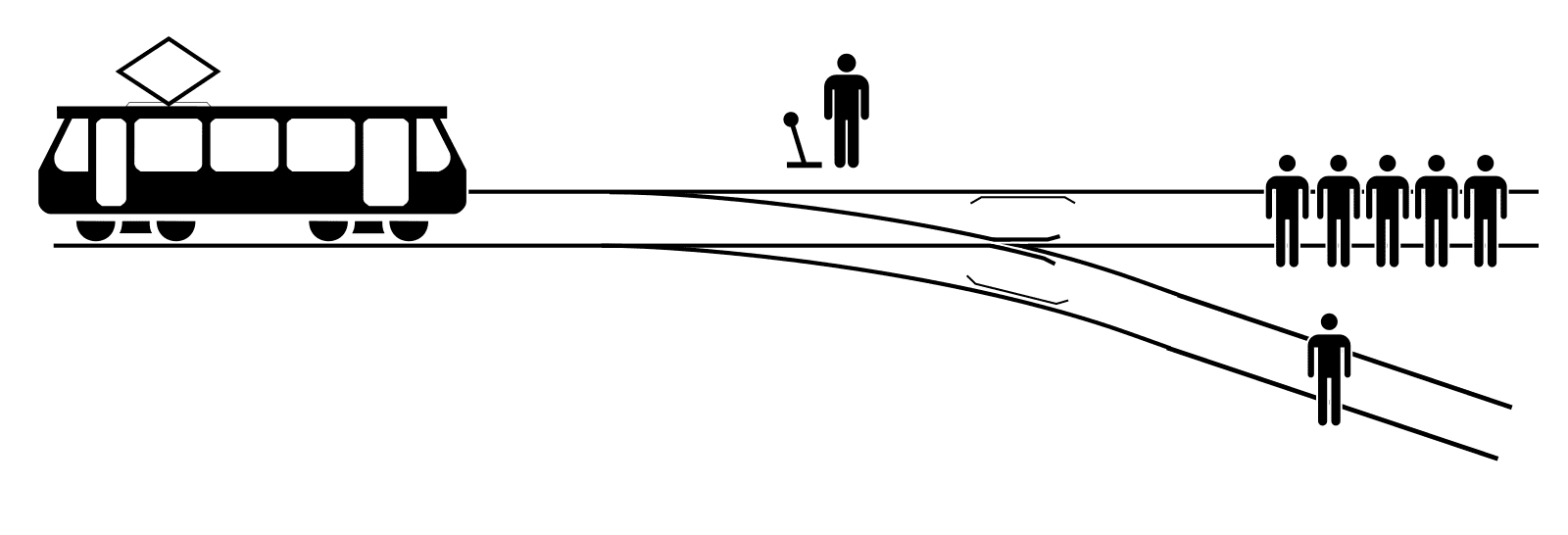

The Trolley Problem is a famous ethical thought experiment that challenges the ethics of sacrificing one life to save many others. Typically, the hypothetical situation is as follows:
You’re standing next to a tram track, watching as a runaway tram approaches five people who are chained to the track and unable to escape. However, if you notice a nearby lever, the tram would be diverted onto a different track, killing the person connected to that track in its place. What do you do?
This puzzle challenges us to think about our moral responsibilities when we have the authority to make a choice that will cause someone’s death. The alternative that saves the most lives may appear logical. Still, it’s vital to consider the value of each life and whether we have a responsibility to defend minorities' rights.
The “right” decision may differ according to two central ethical doctrines. A consequentialist, for instance, would save the lives of the five people, since it maximises total well-being.
On the other hand, a deontologist could contend that we have a responsibility to defend people’s rights and that doing so would be illegal.
The Trolley Problem has no apparent solution, yet it is a helpful tool for investigating ethical quandaries and the ideas that influence human decision-making.
3. ALLEGORY OF THE CAVE
Are we merely seeing the shadows of reality or the reality itself?
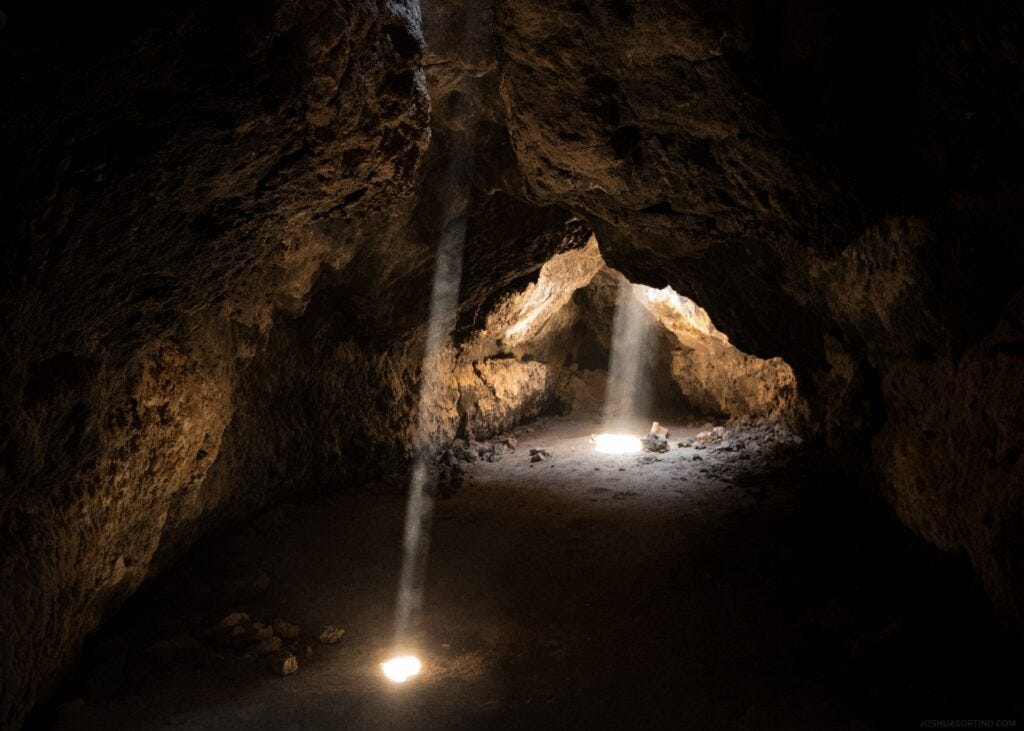
Plato’s “Allegory of the Cave” is one of the well-known philosophical thought experiments concerning the nature of reality and knowing/knowledge. The allegory is as follows:
Imagine a group of people who have spent their entire lives chained to a wall in a cave. They can only see the shadows of things that the fire behind them has cast onto the wall. They believe these shadows are the only reality.
If one of the prisoners were forced to turn around and face the fire, then that prisoner would experience a new reality and realise that the shadows were mere illusions. Let’s say that the prisoner is now allowed to leave the cave and come in contact with the real world outside. When they encounter the outside world, they will come across a reality different from the cave and the fire.
Plato’s allegory makes us wonder whether our perceptions of reality are accurate or merely reflections of a deeper, underlying truth.
It implies that there might be truths that go beyond our current comprehension and that our opinions and knowledge may be constrained by the situations in which we find ourselves. Many consider Plato’s Cave a defence of philosophical inquiry and the quest for knowledge. It implies that we might learn more about ourselves and the world around us by challenging our presumptions and seeking the essence of truth.