


There once was a time when dictators were responsible for the deaths of millions of people. Not so long ago, dictators controlled all aspects of their citizens’ lives, including who they spoke with, what they consumed, how they dressed, and who they revered. Hitler, Mussolini, Stalin, Idi Amin, and Pol Pot evoked fear in their subjects.
But the twenty-first century is a strange time for dictators. Unlike in the past century, today’s dictators have ditched their military uniforms for Western suits, seldom use military force, refrain from using violence, do not execute political opponents in football stadiums, and even permit opposition parties and hold regular elections. Most of these dictators today have co-opted democratic structures to establish rule by popularity and pomp. These new dictators are known as “spin dictators”.

In Spin Dictators: The Changing Face of Tyranny in the 21st Century, Political Scientists Sergei Guriev and Daniel Treisman outline “spin dictatorship” as the new form of dictatorship that foregoes violence and instead relies on subtle acts of popularity and propaganda as opposed to the classic “fear dictatorships” that relied on violent terror to enforce societal order.
Unlike earlier fear dictators who used rule by fear as a standard for governance, present-day dictators use rule by deception. Unlike the fear dictators who used direct, overt, and violent strategies, spin dictators are indirect, covert, and nonviolent. While propaganda was a tool that effectively instituted fear and repression in the classic dictatorship, spin dictators use propaganda to show their competence and effectiveness in governance. They tell stories of how they have brought prosperity, how their rule has spurred economic growth, and how, without their rule, the country would collapse into oblivion.
In essence, spin dictators deceive people into compliance and support by spinning facts and beliefs about the world. And spin dictatorship builds on the fiction that “the dictator is a competent, benevolent democrat”.
Political scientists have shown us that most autocracies have held elections in recent years. Based on a detailed study of over 35 cases across societies in their influential book on competitive authoritarianism, Steven Levitsky and Lucan Way have further shown that these elections are not wholly unfree and that, sometimes, opposition party candidates win seats. Guriev and Treisman build on these ideas and suggest an overarching logic to the spin dictatorship.
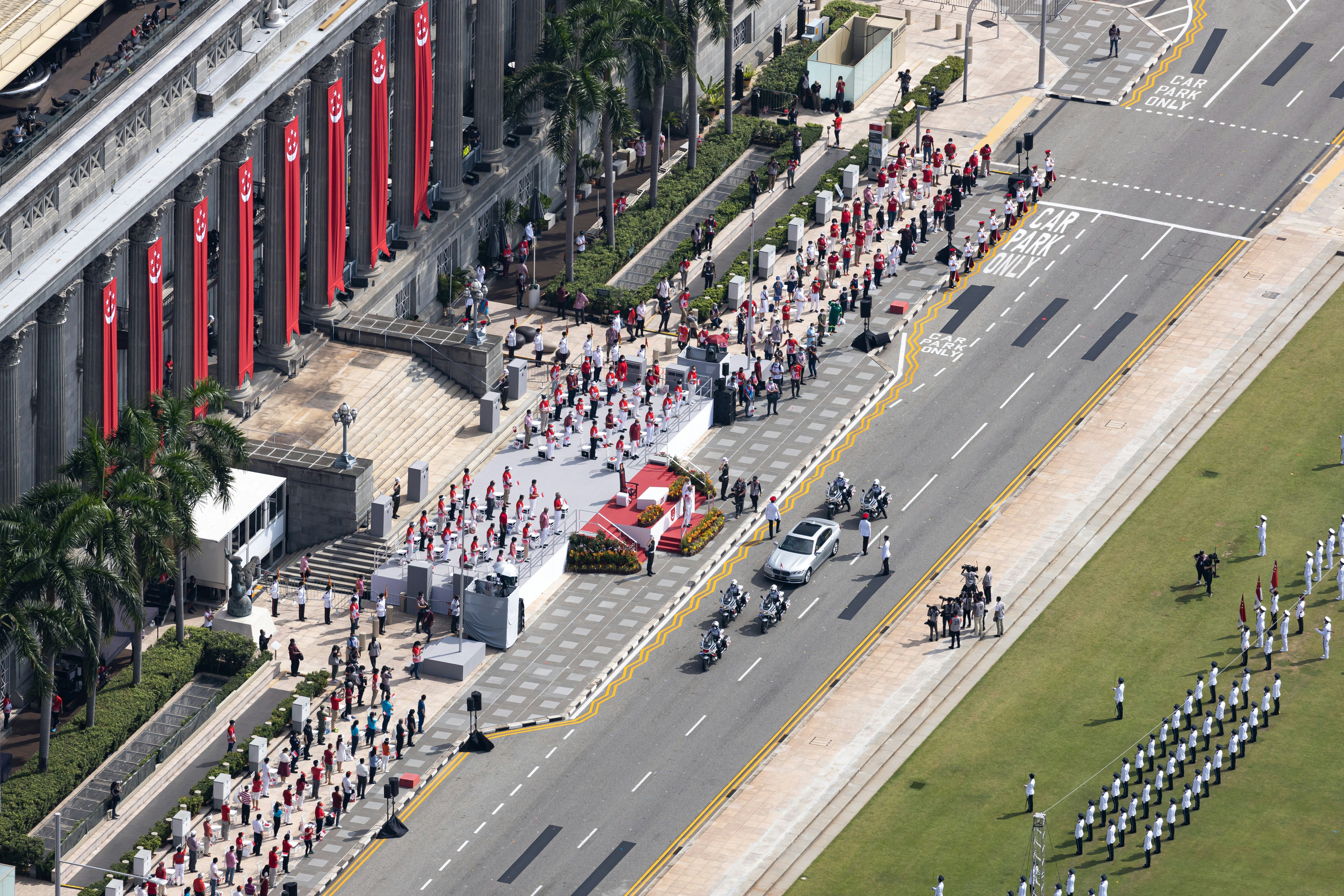
The early manifestations of the spin dictatorship were tried and tested in Singapore. Lee Kuan Yew’s authoritarian model did not endorse violent repression. Lee even considered violence as a failure of governance. Rather than relying on violent repression, Lee’s approach placed subtle restrictions. In this instance, a newspaper risked having its circulation capped for offending the government. Protests were allowed only with a license and a police permit. Opposition leaders attended parliaments, but false defamation cases could bankrupt them.
After Lee, his successors, Goh Chok Tong (1981–2003) and Lee Hsien Loong (2004–), embraced the existing spin model. Moreover, Lee’s model had already spread across Asia and Europe, where rulers were already using libel and defamation lawsuits to harass journalists and opposition leaders.
Following the dissolution of the Soviet Union in 1991, with ruling elites substituting the old governance model with new ones, Kazakhstan’s Nazarbayev embraced Lee’s approach.
In contrast to the Stalinist propaganda of the USSR, Nazarbayev adopted “promise-packed speeches”, much like a national CEO or country manager, introducing new objectives and initiatives like ‘Kazakhstan 2030’, and ‘100 Concrete Steps to Implement Five Institutional Reforms’. Subtle propaganda was used in each case to demonstrate that the leader was making a positive impact on people’s lives and performing well.
For spin dictators to stay in power, popularity is crucial. These autocrats carefully curate approval ratings. To sustain their approval ratings, they buy off media outlets, co-opt critics, encourage self-censorship, and sometimes even rhetorically dismiss the critics as Western agents.
They manufacture indicators of economic performance and claim credit for good growth. And now that everyone has a smartphone and internet access, they even produce a ton of technopop songs that praise them and their macho-man persona. In this context, Guriev and Treisman write: “If Stalin was god, Putin has become a trademark”.
However, all forms of press censorship can turn detrimental. As a result, these leaders occasionally allow criticism to give citizens the impression that the media is generally free. In Venezuela, for instance, Chavez had decided to keep just one opposition TV on air.
Spin dictators pretend to pose as democrats. Once every five years, these dictators hold elections. These elections are curated to demonstrate public approval of their leadership and support for their system. Even though voters and opposition leaders can cast ballots in these elections, the ruling dictator usually wins by a landslide.
Guriev and Treisman add: “These landslides are supported—and magnified—by media manipulation, gerrymandering, and a dose of electoral fraud.” These autocrats use the power of the vote to their advantage by manipulating its outcome.
In an increasingly globalised world, spin dictators have opened their economy and society to the outside world. These autocrats welcome the flow of people, capital, and data into their countries. They open their borders so that people can travel without fear. They let their citizens travel abroad, work hard, and send remittances home. They even join international political and economic institutions. Importantly, they co-opt Western allies and use lobby groups to secure their interests whenever these things backfire.
In essence, spin dictators tend to disdain violent repression, fix their popularity through ratings, conduct elections by pretending to be democratic, and integrate with the world outside to secure their interests.
Contrary to the view that modernisation would cause the rise of democracies, Guriev and Treisman’s thesis shows that modernisation itself has allowed autocrats to innovate and learn new ways of governing and staying in power. It is a refreshing take.
However, as I read through the chapters of this book, I could not help but feel that most of these features applied to the Indian situation. In contemporary India, there exists a pervasive crackdown on journalists and human rights advocates, restrictions on minority rights to facilitate right-wing ascendance, substantial influence of political elites over media establishments, and the targeting of opposition leaders in corruption cases.
Even as Orbán’s Hungary is featured as a spin-off dictatorship, Modi’s India is not mentioned once (and in that context, Kapil Komireddi’s Malevolent Republic offers a fantastic alternative!).
Moreover, has the distinction between democracy and dictatorship become less clear, given the rapid decline in democratic societies and their trend towards authoritarianism? Or does it also mean that, with technological advancements and the state's entrenchment in people's lives, democracies have taken on authoritarian roots, and authoritarian regimes have taken on democratic roots? These questions are left for others to dwell deeply into.
Nonetheless, the book is lucid, immensely readable, and highly recommended.
————————————————————————————————————————