


In her book Islam: A Short History, Karen Armstrong seeks to untangle the tumultuous history of Islam through time. It accounts for the entire historical development of Islam, documenting its rise, evolution, and the challenges posed by its growth.
In doing so, it seeks to dispel the misconceptions about Islam and Muslims that prevail in our time. As a keen observer of religious history, Armstrong’s book on Islam is concise and easy to understand.
Armstrong’s book consists of five chapters, each chronicling how Islam developed over the years—beginning with the life of Prophet Muhammad (570-632) and the foundational ideas of the Muslim ummah (community of believers).
As a businessman and a family man, Muhammad became a prophet, revealed to him by God in the verses of the Quran, with a universal message of equality and social justice. This book moves back and forth, discussing how ideas of equality and justice are tweaked to accommodate social conditions at different times.
Guided by Allah, the Prophet wanted to bring one true God to the Arabs, who, unlike their predecessors, both Christians and Jews (known as the people of The Book), had believed themselves to have been left out of God’s plans.
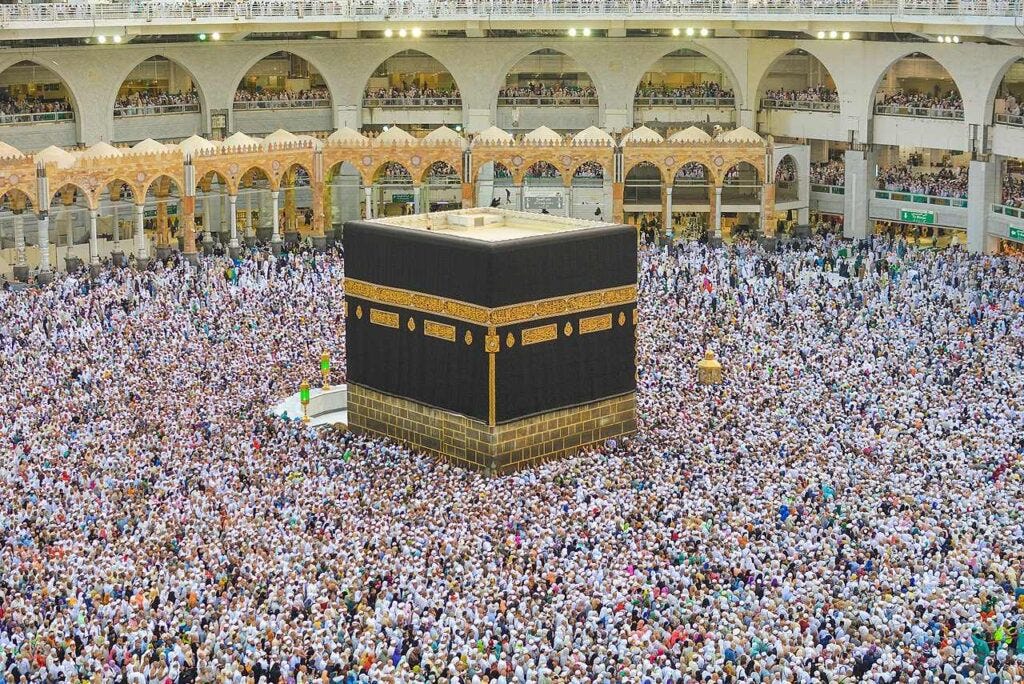
Armstrong writes: “The new sect would eventually be called Islam (surrender); a Muslim was a man or a woman, who had made this submission of their entire being to Allah (God) and his demand that human beings behave to one another with justice, equity and compassion” (p. 5).
Further, she adds that giving a proportion of their income to the poor as almsgiving (known as zakat) and fasting during Ramadan are essential to being a Muslim. And that Muslims were commanded as their first duty to build a community (ummah) characterised by “compassion and fair distribution of wealth”.
In 622, Muhammad and his followers set out for Yathrib (Medina) from Mecca. Known as the hijrah, it marks a pivotal event at the start of the Muslim period. After taking over Mecca from Quraysh without shedding a drop of blood, Muhammad established Islam as the essential religion of the region.
From Muhammad, Islam now shifts towards four Rashidun (the four “rightly guided” successors, caliphs, to the Prophet: Abu Bakr, Umar, Uthman and Ali). However, this period is marked by constant tussles over who is the rightful successor of the ummah. Significant feuds were known as the first and second fitnah (the time of temptation).
Armstrong also meticulously documents the intrinsic elements of factions within Islam that would arise over the years. For Shia Muslims, the massacre of the Prophet’s grandson, Husain and his family on the plains of Karbala in 680 marks a point of betrayal and injustice. Whereas, for Sunni Muslims, the community of the believers is paramount to experiencing the divine.
Sunni Muslims revere Muhammad and all four Rashiduns. In contrast, Shiis demote the first three Rashiduns as having caused injustice to Ali, whom they believe to be the lone legitimate imam of the Umma. There are four schools of Sunni Muslims (Hanafi, Maliki, Shafii, and Hanbali Schools). And many Shii Muslims believe in Twelve Imams (all descendants of Ali), known as “Twelver Shiah”.
Armstrong also meticulously documents the distinct characteristics of Sufism, a mystical tradition within Sunni Islam. Sufis, she notes, sought God in the depths of their beings rather than in political and social events. Sufism emerged as a reactionary movement against the growing worldliness and luxury in Muslim society.
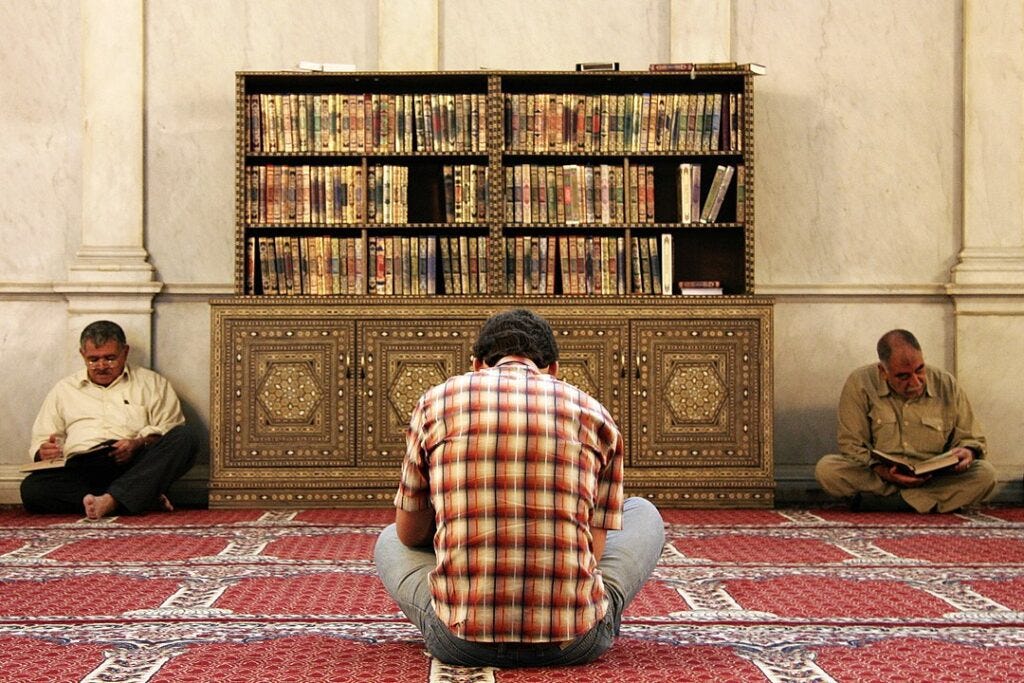
Sufis believe that ordinary Muslims could receive Muhammad-like revelations of the Quran. Moreover, Sufis clustered around their pirs, who instructed their disciples. Over the years, as it became increasingly difficult to hold the whole ummah together, these three sects received allegiance from different political dynasties and caliphates.
In addition to the religious developments, Armstrong discusses how Muslim rule, as a political project, took shape over the years. She outlines how Islam has spread significantly worldwide since Mongol rule. Moreover, she examines how political Islam paved the way for absolute monarchy in three Islamic empires: the Safavids (in Iran), the Mughals (in India), and the Ottomans (in Turkey).
Each of these Muslim kingdoms had a different political style. The Safavid Empire sought to convert the whole of Sunni Muslims into Shii Muslims through oppression. The Mughals, however, did not undertake such a task, and Akbar sought to orient his Islam toward Sufi traditions. In Istanbul, Ottomans sought to create a vast ulama bureaucracy and a highly efficient army sanctioned by Shariah.
In the chapter titled “Islam Agonistes”, Armstrong brings Islam into modernity. She takes a cue from Edward Said’s Orientalism to discuss the development of East and Southeast Asia and the narratives of the West and Europe.
Armstrong discusses Mustafa Kemal Atatürk’s Turkey, Abd al-Nasser's Egypt, and Reza Shah Pahlavi's Iran to examine how each of these regimes sought to reinstitute secularism in ways antithetical to Islam. They reinforced Western clothing, mannerisms, and lifestyles in their people.
Armstrong presents a discussion on fundamentalism as being prominent in all religions, and it is not merely unique to Islam. She looks at how 9/11 reflected a defining moment in discussions on Islam and about the understandings of Islam reconfigured. However, I would have really appreciated a more substantial discussion of how women's clothing has evolved over the years within Islamic traditions.
Throughout the work, Armstrong has corrected several stereotypes surrounding Islam and Muslims. In doing so, she has presented a uniquely comprehensive story of Islam through the ages. The author has shown how tensions between tradition and modernity, religion and secularism, and moderation and extremist tendencies are at the centre of the story of Islam.
Hi Adarsh, You have given a good summary of a good book. Her other book, Mohammad a biography is also very good. Karen Armstrong is an expert on Theology and understands religions well. Your subscribers and followers might also find the book of Ed Hussain, a previous Islamist, also very insightful. The title of the book: The House of Islam: A Global History. This one is my favourite: written from inside and then outside islamist religion and culture. Here a link to a review in The Guardian.
All the best,
Subhash
https://www.theguardian.com/books/2018/jul/11/the-house-of-islam-ed-husain-review?CMP=Share_iOSApp_Other