


In his book "Descartes' Error," Antonio Damasio discusses the role of emotions in rationality, presenting the case of Phineas Gage. The case of Phineas Gage in the summer of 1848 was so strange that the daily tabloids ran news for days in New England. Gage worked for the Rutland Burlington Railroad and was responsible for the group laying rail track.
One not-so-fine afternoon, when Gage was working with gunpowder, accidental fire struck his left cheek. The fire pierces through the left eye, traverses the front part of his brain, and exits from the top of his head. However, that incident did not kill Gage—miraculously, it did not even harm his rational facet of the brain and his decision-making ability.
Gage had lost an eye, but he talked rationally. He was “willing to answer questions” directed by his physician, Dr John M. Harlow. He even went back to work. He was as rational in his decision-making as he had been earlier. However, there was something amiss about Phineas Gage. He had grown profane towards women, calling them out in foul language. Once a gentleman and well-behaved worker, Gage was now callous and couldn't care less about the future. After the accident, Phineas Gage was no longer the same old Phineas Gage. He had lost the ability to observe previously acquired social norms and rules of societal behaviour.
Connection Between Brain, Mind, and Body
This story tells us more about ourselves, our brains, our minds, and our bodies. It tells us that there is much more to rationality—or the rational aspect of our brain—to make us who we are. It suggests that there is something more to us than just the reason for being social animals.
Gage’s example tells us that “something in the brain was concerned specifically with unique human properties, among them the ability to anticipate the future”. Since his death and the subsequent efforts to preserve his skull, Gage has become a case study for neuroscientists and neurobiologists for centuries. For them, the bigger question was: what prompted the erratic behaviour in Gage?
Antonio Damasio and the Emotions Turn
Antonio Damasio, a neuroscientist of repute, has some answers for us. His book, Descartes’ Error, published in 1994, presents a case about the interconnectedness of emotions and rationality. His thesis rests on the notion that “certain aspects of the process of emotion and feelings are indispensable for rationality.”
They point us in the right direction while making decisions. Emotions assist us with predicting “an uncertain future and planning our actions accordingly”—which Gage had unfortunately lost. Feelings serve “as internal guides” that help us “communicate to others signals that can also guide them”.
Damasio suggests that feelings provide a powerful influence on how our reason gets shaped. These emotions are “interwoven with [systems] which regulate the body”, enabling a human’s proper functioning. The reason is the brain’s function, but the brain also has a particular emotional regulation mechanism which guides it.
Therefore, rationality, emotions and the human body are interwoven. They exist in dependence on the other. One can partially argue that the accident in Gage’s case had affected his emotional functioning of the brain, which caused him to lose his ability to be social.
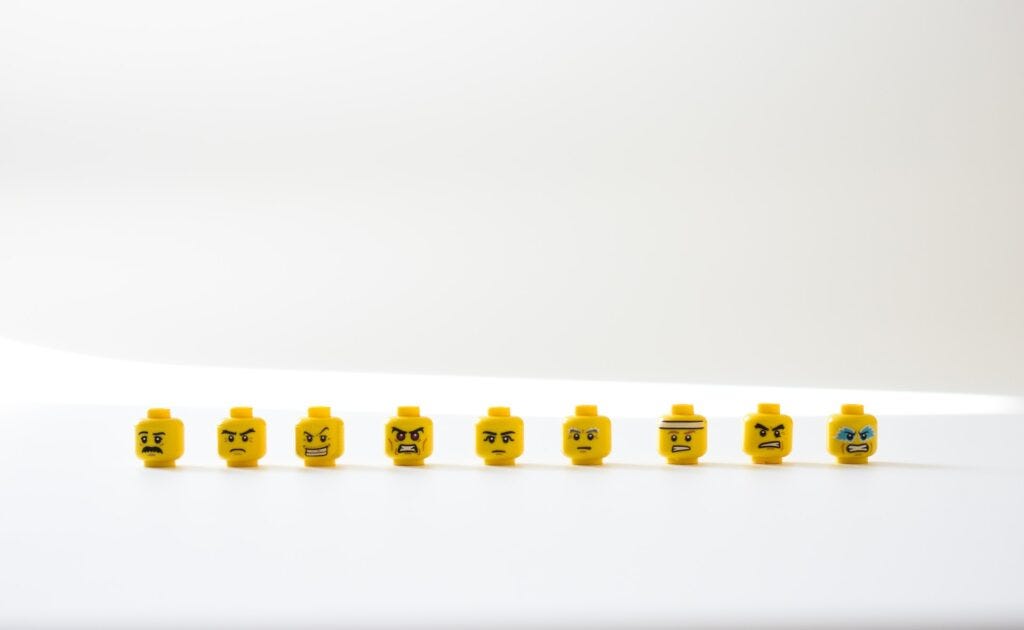
Emotions and Rationality in Living Beings
But why is this information relevant to us?
In human societies, rationality and emotions have been largely viewed as antithetical. We are often told that we need to be less emotional to make rational decisions. If emotions drive us, then we are most definitely bound to fail. Emotions blur our vision.
Leaders are advised not to be swayed by their emotional instincts but by reason. What explains this aversion towards emotional thinking? We must turn to philosophy to gain insight into this.
Rene Descartes and Rationality
Rene Descartes, a 16th-century French philosopher of science, split our understanding of the mind from the brain and body. He dissociated his brain and body as if they were two separate entities. While the body experiences emotions, the brain calculates reason.
Descartes wrote in Latin, “Cogito ergo sum”, translated to English as “I think therefore I am.”
This suggests that “thinking” or the “awareness of things” is the “real substrate of being”. Thinking, for Descartes, was an activity separate from the body, as it was merely the brain’s doing.
Damasio calls this “abysmal separation between body and mind”, Descartes’ Error. However, the Cartesian split of mind and body pervades scientific and social science research.
Damasio notes that, as humans, we evolved through the development of consciousness. In another of his books, The Feeling of What Happens, published in 1999, Damasio proposes a three-layered theory of consciousness. These three layers are protoself, core consciousness, and extended consciousness.
I Feel, Therefore I am
Damasio argues that consciousness relies on emotion, feeling, and experiencing feelings. I feel, therefore I am. In Descartes’ Error, Damasio argues, with consciousness came the mind. Then, the thinking. After that, the ability to communicate and organise languages.
With this logic, one can argue that the being (our existence) first came, then the thinking (mind). But neither is it disjunct as Descartes had once claimed.
When someone tells us, “follow your heart” or “go with your gut”, one may wonder what they mean. Sometimes, we may want logical responses to such questions. However, Damasio suggests that the notion of following one’s heart may have merit.
Somatic Marker Hypothesis
Damasio proposes the somatic marker hypothesis (SMH), which argues that emotions have an active role (consciously or unconsciously affecting) in decision-making by creating biomarkers known as somatic markers. These somatic markers refer to the changes our body and brain experience in response to an emotion caused by an external or imaginary environment.
Somatic markers include changes in muscle tone, heartbeat, endocrine activity, posture, and facial expression. These somatic markers help us understand the embodied nature of emotions and rational decision-making.
Conclusion: Emotions and Rationality
Damasio, however, cautions us: “I do not believe that knowledge about feelings should make us less inclined to empirical verification. I only see that greater knowledge about the physiology of emotion and feeling should make us more aware of the pitfalls of scientific observation.”
Damasio’s assessment of the interconnectedness of emotions and rationality enables us to reexamine the role of emotions in our socialisation and the persistence of rational decision-making capacity. This particular view of emotions can further enhance our understanding of the world around us. As researchers, if we escape Descartes’ Error, we will better incorporate the role of emotions in our society's structure.
Read my latest article on the role of emotions in environmental activism in the global south here.