


Anthropologist Bernard S. Cohn, a pioneer in writing about British colonialism in India, in his work Colonialism and Its Forms of Knowledge: The British in India, introduces us to the term “Investigative Modalities”. Although at first glance the term may seem alien to postcolonialism, it adds an important dimension to postcolonial scholarship on knowledge production.
Cohn’s work has inspired and influenced writings on South Asia and South-East Asia. Earlier, this blog reviewed the work of one of Cohn’s famous students, Nicholas Dirks, and his pathbreaking work The Castes of Mind: Colonialism and the Making of Modern India. To read that essay, click here. Ronald Inden, another postcolonial scholar, was his student.
Apart from the illustrious set of students he had supervised, Cohn was also known for “his lucid prose combined with an amazing command over English, vernacular, and anglo-vernacular sources and narrative and archive use never escaped the minds of the readers who found it difficult to stop reading the essay halfway through.”
In this blog, I will discuss his important contribution to the scholarship on British colonialism through the lens of Investigative modalities.
Colonialism and Knowledge Production
One of the running tropes of arguments propounded by postcolonial scholars is that colonialism transformed the way we think, represent and talk about ourselves.
Postcolonial scholarship emerged in the 1970s through the writings of Edward Said in Orientalism, Franz Fanon in The Wretched of the Earth and Black Skins, White Masks, Ashis Nandy in The Intimate Enemy, Gayatri Spivak in A Critique of Postcolonial Reason, and others. This school of thought asked pertinent questions about how knowledge is produced about the other in relation to power relations.
Edward Said, in his Orientalism (1978), writes:
Orientalism was responsible for expressing and representing ‘the Orient’ as primitive and inferior, as the recurring image of the Other, in order to dominate, restructure, and have authority over the Orient.
(Said 1978)
Said also shows his readers that “the European culture gained in strength and identity by setting itself against the Orient as a sort of surrogate and even underground self”. Bernard Cohn takes this approach in studying the practicable ways in which European knowledge production worked.
Classification, Codification, Registration: Investigative Modalities
The European powers increasingly made their powers visible through the process of “officialising” procedures. It began with control over the definition and classification of space, leading to a strict distinction between the public and the private. Michel Foucault has referred to this phenomenon as “Governmentality”.
In the Foucauldian sense, governmentality refers to the ability of a state/or government to treat the population not as people, but as numbers. It takes the population as objects—with purpose. This population is constituted and reconstituted to suit the ruling desires of a state.
British colonialism in India began by assigning official value to terminology. Births, deaths, and marriages gained a process of formalisation. Registration (of birth, death, and marriage) is made for your existence. If you don’t have the paper, you don’t exist. Or if you don’t exist, and since your paper says you do, you cannot go in peace. Remember CAA and NRC!
There was also a standardisation of language. You should only speak this way; otherwise, we don’t understand what you are saying. This standardisation occurred in most European states and was soon, by virtue of colonialism, applied to colonised territories (including India).
Cohn also states that there was a strict policy of what accounts were official, legal, and legitimate. If you didn’t fit in, you would be punished. There was a codification of laws and practices. More importantly, the Census was introduced. It was a mechanism for the British to determine, codify, constitute, and enumerate the population.
This documentation of Indians (a means to learn about the alien society—the alluring culture they possessed) was systematically done to further assert their rule over them.
Bernard Cohn’s Investigative Modalities
Colonialism was as much a cultural project as it was political and economic. It is this part of colonialism that Cohn seeks to uncover. Bernard Cohn argues that the process of classification, categorisation, and documentation was carried out through a series of investigative modalities.
Investigative Modalities:
The definition of a body of information that is needed, the procedures by which appropriate knowledge is gathered, its ordering and classification, then how it is transformed into usable forms such as published reports, statistical returns, histories, gazetteers, legal codes, and encyclopaedia.
(Cohn 1996)
In loose terms, investigative modalities refer to the processes of collecting facts that the British used in India to govern Indians.
Bernard Cohn identifies SIX investigative modalities: The Historiographical Modality; The Observational/Travel Modality; The Survey Modality; The Enumerative Modality; The Museological Modality; The Surveillance Modality.
What is the Historiographical Modality?
According to Cohn, historical modality is the most “complex, pervasive and powerful modality” used by the British. This modality serves as the basis for subsequent modalities. Historical modality refers to the investigation of the knowledge of Indian history and practices.
There were three ways historical modality functioned under British colonialism:
First, the British began asking questions about how the existing Indian rulers had codified their ruling practices. This knowledge, the British thought, would help build a most valuable source of knowledge upon which they would build their empire.
To do so, the British began investigating through “enquiries”—asking a list of questions on how revenue was assessed and collected.
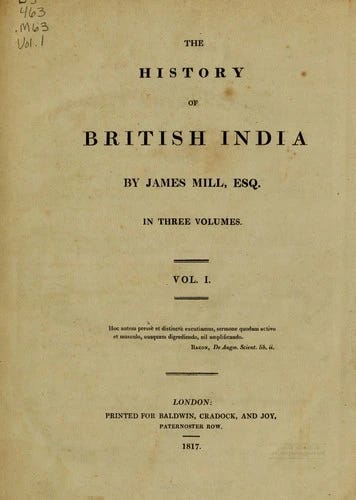

Second, there was an effort to typify Indian civilisation through the ideological construction of the civilising mission. They drew on the writings of early historical works by Orientalist scholars such as Alexander Dow, Robert Orme, Charles Grant, and James Mill.
To gain a broad understanding of how this process was carried out, read: Dirks’ Castes of Mind. Moreover, there were efforts to suggest that Indians were backward, and that they needed to be civilised, and that the British were merely on that mission.
Third, there was an effort to reconstruct the “popular history” of events significant to local people – and represent them. Some of these examples could include the stories of the Black Hole of Calcutta, the siege of Calcutta, and the defeat of Tippu Sultan, among others.
What is an Observational/Travel Modality?
Observation—an imperial gaze—is an important element of any form of colonial control. The observational modality discusses how itineraries were created and then used by the British to navigate India. There were landmarks now represented on maps. In addition, there was a sketch of the kind of things they saw and felt amazed by.
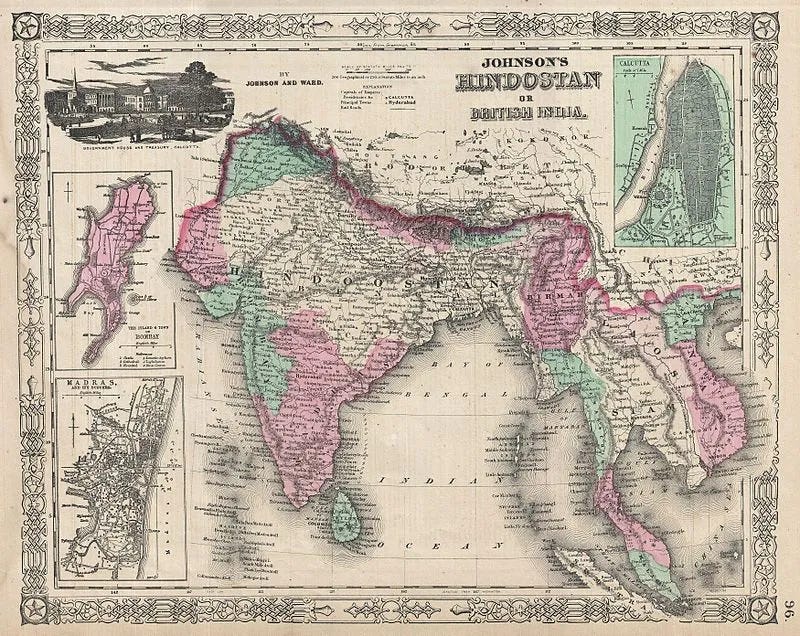

It was a kind of “repertoire of images and typifications” that determined what Europeans considered significant. This interest in documenting India through its practices was further driven by the creation of categories defining what made an Indian.
In fact, the behaviour of an Indian was not consciously used to create stereotypical categories that pervade European societies to this day. That is India—a land of a fakir, a snake charmer, and spices.
What is a Survey Modality?
Surveying people and places surely was one of the important modalities of Europeans. The survey modality is one of the investigative modalities, comprising mapping India, collecting botanical specimens, recording architectural and archaeological sites, and measuring a farmer’s land.

In 1765, Robert Clive appointed James Rennell to survey the whole of Bengal. It was with him that surveying began as a modality in India. It also paved the way for new ways of documentation.
Rennall was followed by Colin Mackenzie and Alexander Cunningham. Documentation and classification became important tools for governance. These tools were further standardised and refined through the colonial period. This method was further used to point out topology, flora and fauna, ethnography, culture, and economy.
What is an Enumerative Modality?
Enumerative modality is interesting! It is also a modality I have obsessed myself with understanding since my Master's days at Delhi University. This modality has shaped my thinking about caste categories and identity politics.
But that aside, here is what it means.
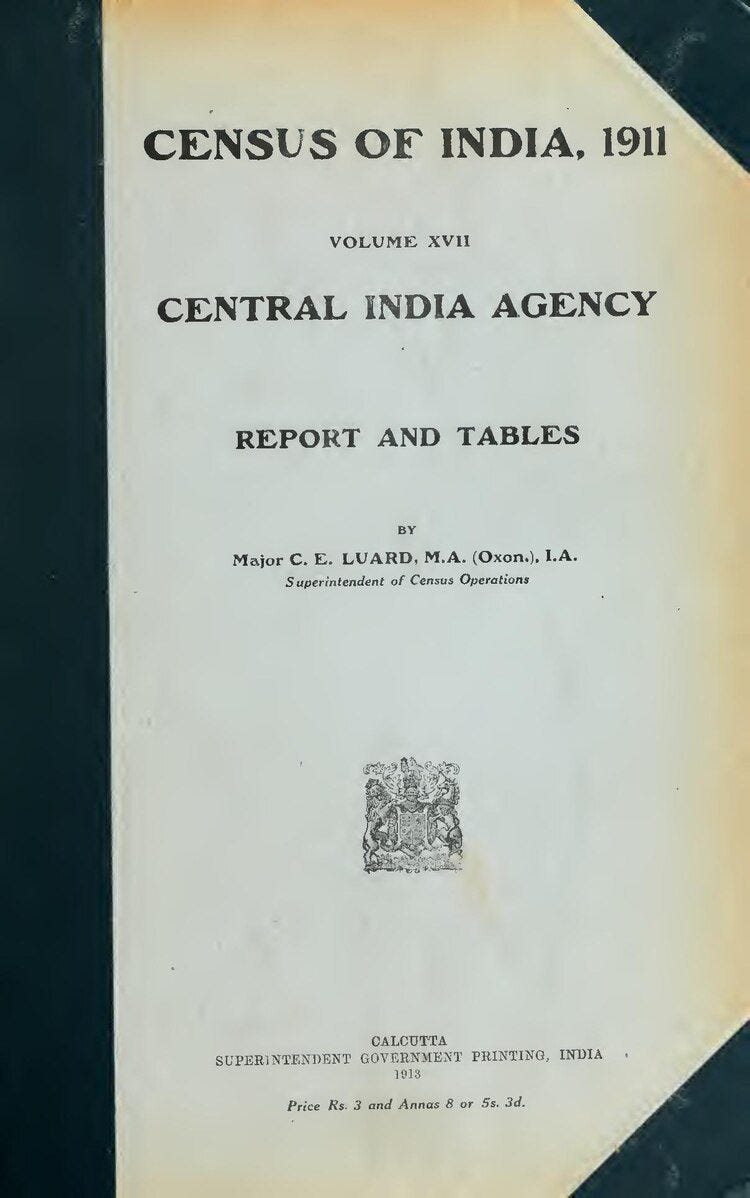
It is a modality that focuses on collecting basic information about the people the colonisers rule. India was a vast reservoir of numbers. Cohn argues, “A number was, for the British, a particular form of certainty to be held on to in a strange world”.
After the 1857 revolt, the British realised the need to classify Indians. As a result of it, they began attempting a census project to categorise Indians into one of the pre-defined identities. By 1881, the British had perfected their classification structure, which included collecting data about religion, caste, gender, sect, etc.
Primordiality of Indian Societies
However, a singular identity did not define primordial Indian societies, and it was complex to identify an individual with a single identity. Therefore, the British began to prioritise one identity over the other. The category “Mohammedan Hindus” in parts of colonial India was either classified as Hindus or Muslims.
Otherwise, Kaviraj's conception of fuzzy communities has made this argument. Kaviraj further argues that, with modernity, identities emerged as we see them today. In 1901, Herbert Hope Risley introduced the caste census in India. However, it was a flawed model, and to gain an in-depth understanding, read Dirks.
In essence, enumerative modality helped reshape individuals' identities into structured social categories. And by default, it propelled identity and communal politics in India.
What is a Museological Modality?
For the Europeans, India was a vast museum. Its past sources of collectables and curiosities were found, extracted, translated, preserved, and often transported to fill European museums, zoos, botanical gardens, and country houses. Thousands of tigers were killed so that the British officers would hang a leather sheet in their houses.
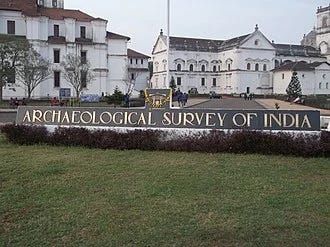
Importantly, many archaeological sites were identified and mapped (including Harappa and Mohenjo-Daro). Colin Mackenzie collected archaeological specimens, texts, manuscripts, and oral historical records in South India.
The Archaeological Survey of India (ASI) was also created in 1859, with Alexander Cunningham as its head. ASI was mainly tasked with recording important sites based on topographical research.
In the museological modality, the British gained the power to “define the nature of past and establish priorities” in creating a corpus of civilisation, canons of taste, practices, and instrumentalities of rulership.
What is a Surveillance Modality?
Surveillance is an important source of control. Today, it is even more sophisticated with the introduction of virtual panopticons, such as CCTV cameras. But it is nothing new. The Panopticon was first discussed as a prison structure by Jeremy Bentham in the 19th Century.
During the British period, the coloniser had learnt to survey Indians from above, afar, and at a distance: from a horse, on an elephant, a boat, a carriage, or a train. This view from above led the British to adopt a sophisticated outlook on his social position. It also enforced colonial subjects as someone to be looked up to, read about, to be experimented with, and behaviour tweaked.
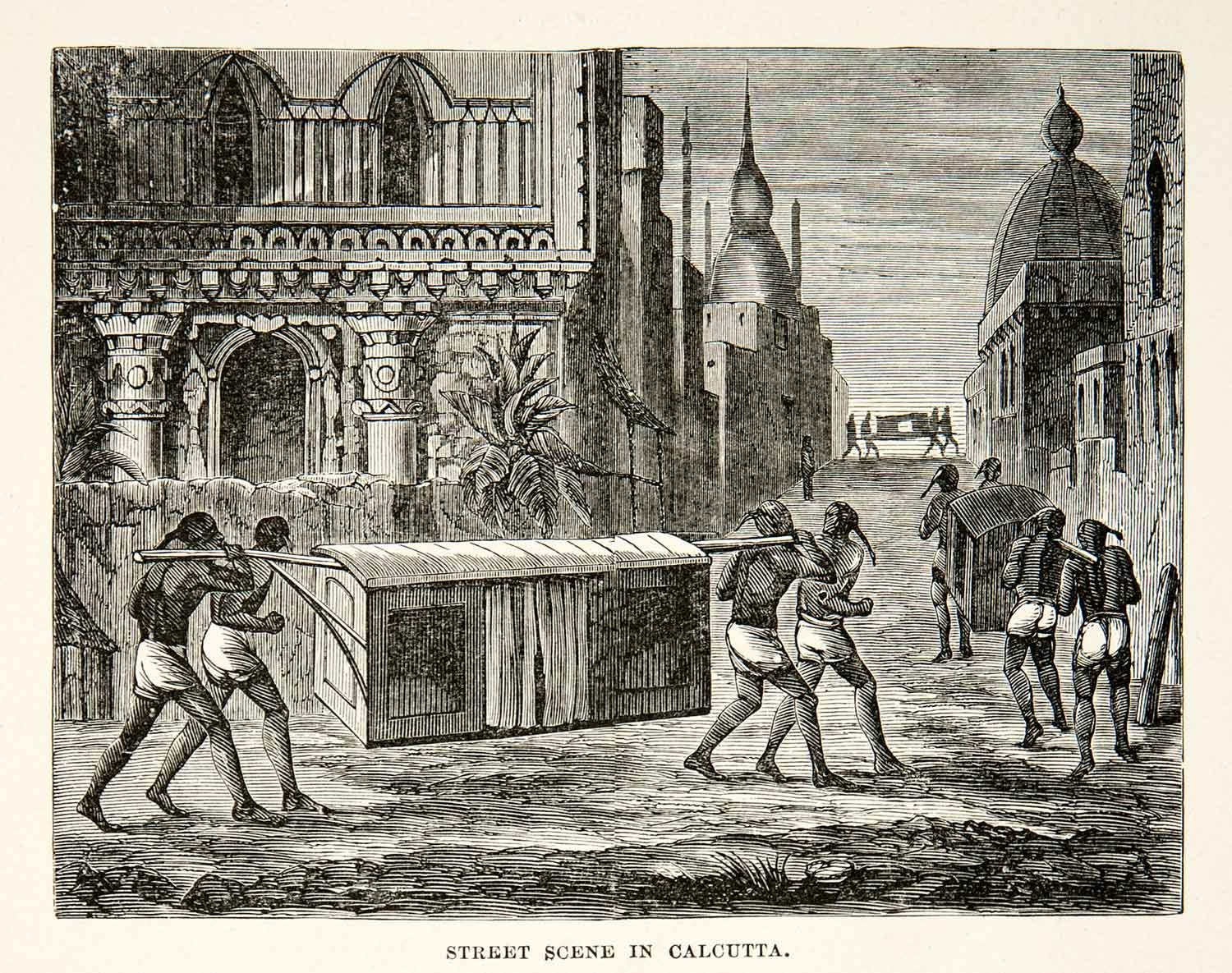

The “imperial gaze” had a goal—of assigning roles to everyone in society. Under colonial sociological theatre, Cohn writes, everyone, including the ruler and the ruled, had proper roles to play. As a result, there were classifications of special categories: sanyasis, sadhus, fakirs, dacoits, goondas, thugs, pastoralists, herders, and entertainers.
Further, in 1835, the British established the Thuggee and Dacoity Department to investigate and punish robbers and murderers. There was also a sophisticated use of informers, who provided evidence to the British about the cultures of thuggery and communities of the so-called thuggery. Fingerprints were used to individualise documents.
Conclusion: The Imprints of Investigative Modalities
Now, as we look back at these colonial forms of knowledge, the new elite of independent India acquired these bureaucratic institutions. The end of colonialism did not end colonial state rule, but its forms of knowledge production remain prevalent in present-day South Asia.
For instance, see the debates around caste census, debates around personal laws of marriage, the institutionalised role of police brutality in the face of protests, and the identity, sectarian and religious violence prevalent in South Asia—and specifically in the Indian Subcontinent.
While British colonialism ended in 1947 in India, the colonial forms of knowledge live on.
References:
Cohn, Bernard S. Colonialism and Its Forms of Knowledge: The British in India. Princeton University Press, 1996.
Cohn, Bernard S.. An anthropologist among the historians and other essays. India: Oxford University Press, 1987.
Dirks, N. B. (1979). The structure and meaning of political relations in a south Indian little kingdom. Contributions to Indian Sociology, 13(2), 169-206. https://doi.org/10.1177/006996677901300202